


GARDENS AS SOCIAL INFRASTRUCTURE, GARDENERS AS PUBLIC SERVANTS, with CHRIS FEHLHABER
Updated: Aug 20
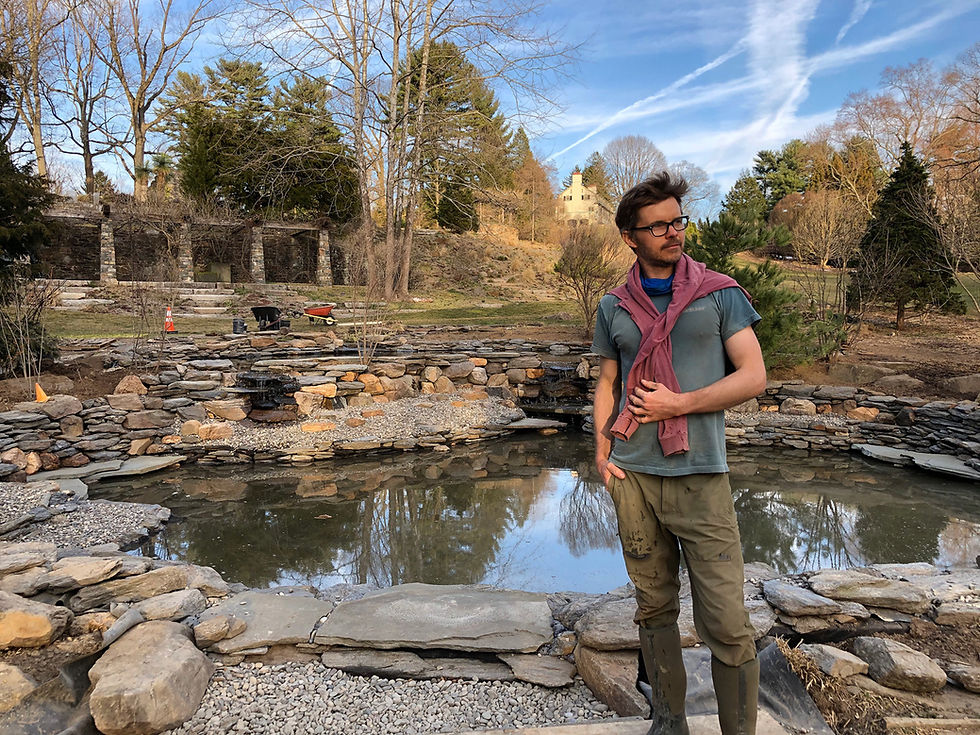
Chris Fehlhaber is a Gardener, a husband, and a father. Now based in the Chicago area, Chris has worked in public horticulture in a variety of capacities and with well-known organizations including with plantsman Roy Diblik in Wisconsin, at Chanticleer Garden outside of Philadelphia, with the Perennial Plant Association, and as one of the co-hosts of the Native Plant Podcast.
After nearly 2 decades, working with people and places of great privilege, and people and places who would like more gardens and more garden opportunities, Chris now understand gardens as critical social infrastructure, and Gardeners as public servant leaders whose greatest tools are empathy and meeting people and places where they are.
This is a fascinating Quantum Gardening conversation - join us!
SOME FOLLOW UP NOTES FROM CHRIS ABOUT THE RADIATING IMPACT OF GARDENS AS SOCIAL INFRASTRUCTURE:
"Gardens are social infrastructure in themselves but may also be paired with existing sites of social infrastructure to enhance the effect. Think of any existing built up suburban or urban area, there’s not a lot of land to be saved or preserved. Like housing we have to infill. There is a lot of land already occupied for “public” purposes: schools, libraries, government buildings, parks, transportation infrastructure, post offices, the list goes on – all places/opportunities for gardens! Then you can take it to the next level and include churches, nonprofits and so on. Then there are vacant lots or other inactivated spaces.
Each provides its own unique opportunity for how to best garden and care for the space and how that space best serves the community’s needs.
Community input is crucial – don’t want to repeat the mistakes of the past and implement top-down approaches. Talked with some other organizations doing similar work and agree that a “Menu option” may be a good approach – unlimited options lead to limited results, its overwhelming and people don’t know what they don’t know. Can spend years doing community engagement and still wind up with just a picnic table.
With gardens of social infrastructure, we truly must let our ego go as these spaces are truly public. On many of my sites I may only see and garden in them a few times a year and sometimes entirely virtually – they must have a robust, thoughtful plant palette that can thrive mostly independently. Other people intervene and cut things back, cars and Amazon trucks drive through them, people add a favorite plant. It’s hard to allow these acts as sometimes they are disturbance, but they can also be beautiful – people investing in the space.
These may not be the world’s most inspiring or creative gardens, but they work! Not every garden has to be Chanticleer. A garden out of place is just as - if not more - inspiring – gardens in unexpected places sometimes have the best results.
Wayne parking lot Radnor conservancy story
I could do a whole talk on this, so I’ll keep it brief here.
A resident who I got to know well through the Mainline School Night Garden was quite inspired by it and approached the township of Radnor about planting the beds of a new municipal parking lot into a garden – instead of just wood mulch and the occasional Karl Foerster. After great effort and salesmanship on his part and with the support of Radnor Conservancy the township agreed.
Despite a lot of work, the garden barely exists – it never could in the system it was placed in. Once you approach all sides with empathy, see their perspectives and the logic behind them it’s easy to understand why the well-intentioned project failed for many reasons. It’s a good example of why we must lead with empathy and do the heavy unglamorous work required behind the scenes to make gardens in our everyday lives a reality – to make them the rule instead of the exception.
EG Park update – after 11 years
Since we spoke, the village manager of my hometown approached me about the possibility for additional gardens and cared for green spaces in the community. This all started from the library garden. First, it gained the support of the friend’s group who commissioned it. Then it gained the support of the library itself who promoted it. Then the municipal workers advocated for its expansion instead of continuing to try and maintain turf where it didn’t belong. Then the neighbors and residents of the village. Now, after a decade the village itself has taken notice and is interested in doing more. An important lesson in patience and the true speed of change. It’s why I say change happens one drop at a time. It’s still early staged but I’m hopeful the impacts are about to multiply greatly. Early days, but very positive.
Kathleen and neighborhood green space story
This is a private client I took in Bryn Mawr PA for one reason – they are the only house on the way in and out of an otherwise closed loop subdivision, meaning everyone who lives or visits must pass the garden twice. The garden itself was, at least to me, rather straightforward, a soft landing under a mature oak where the grass no longer grew. We added understory trees and shrubs and a diverse layer of perennials, sedges, ferns and ephemerals. A rain garden was also included to service the rainwater the downspout collected from 1/3 of the total rooftop. It was planted in late autumn and by the same time the following year looked as though it had been there for ages. An appropriate plant palette and thoughtful design meant minimal stewardship was required, just the occasional quick pass, a good eye and the knowledge of what undesirable seedlings look like is all that was needed. This was the first section with many more to follow but it was the first section I was most interested in as it was the most visible to the neighbors, who immediately took notice – people began altering their walks to check on it.
Soon after, the HOA president reached out. He was new to the position, liked the garden and wanted to do something about the (I believe it was) 4 acres of green space the neighborhood owned and managed across the street. For years it received the standard weekly mow and blow but now the primarily ash canopy of mature trees was failing. A creek ran through the site and rather frequently overflowed its banks making the turf less than ideal for formal recreation. The HOA president wanted to “restore” the site. We began working together to come up with a plan to gradually thin the canopy (unfortunately they did not want to take the risk - in their mind – of keeping standing and fallen deadwood) and replace it with a diversity of native species reflecting what southeast PA’s future forest will likely look like as it shifts to more of an oak-hickory composition due to climate change. Utilizing the wall at Chanticleer, “rescued” seedlings, and Radnor Conservancy’s native tree program we began planting and caring for over a dozen new trees annually selected for diversity and structural complexity. Now several years in, the trees are growing, the neighbors enjoy it and biodiversity and ecosystem services have undoubtedly improved.
The initial landscape proved very popular with neighbors, and I was approached for a lot of additional work but being full time at Chanticleer turned it down. I was after proof of concept and I was satisfied with the results.
Athens Garden Story – “afterthought garden” – grow gardens not hate
This garden was outside an apartment my partner and I lived in for 4 years in Ardmore PA. After a few years of convincing, our landlord finally let me put in a garden. I call it the afterthought garden because it was made almost exclusively of rescued plants from “the wall” at Chanticleer where plants without a home in the garden are given up for personal use by staff – I also utilized the wall to donate a lot of good plants to community organizations and social infrastructure gardens that I worked on. The building had a nice porch that we sat on most evenings when it was nice outside. Before the garden went in, we were merely spectators watching people walk past and live their lives but despite out waving or saying “hello” people rarely engaged. Once the garden went in, however, things changed – people became curious. We got to know our neighbors, we made friends. Strangers who we saw regularly were no longer strangers. People became invested, they stopped and looked and learned, they picked up litter and no longer let their dogs do their thing in the garden. The garden was the neighborhood meeting place where people lingered, exchanged news and gossip and during the pandemic felt comfortable still social distancing outside.
Then in 2020 during the protests over George Floyd’s murder the garden became something more. A march was gathering down the street from us. People were calling each other trying to meet up and coordinate – they needed a landmark. Somebody said, “meet at the garden”. Suddenly multiple groups converged in front of our place, gathering and preparing to march. The sign “Grow Gardens Not Hate” emerged from this. I made it on the spot and carried it in the march. It stood in the garden until sometime after we moved out. The garden was a place for gathering – a theme that became central to my pandemic experience and that of our neighbors. A powerful idea I try and carry forward.
MLSN as place for community
The Mainline School Night Garden was meant to be a community gathering place and formal events have always been a part of it. In 2020 it hosted the only in-person class for the entire year – it was the only place people felt comfortable gathering in person (still socially distant of course). It also became a place of memorial and remembrance. Chris Smith was a tireless advocate for the garden and oversaw the memorial paver program for the center path. She left us far too soon, but we had a lovely community celebration of life for her in the garden. Others dedicated pavers to loved ones as well and I got to know many of them who chose to visit their pavers instead of a grave because they thought the person it was honoring was happier in the garden. It was a privilege to get to know the people who came to remember their loved ones and hear their stories.
In 2025 knowing I was moving and would no longer be able to care for that garden and teach classes I did what all good gardens do – diversified! I approached Radnor Conservancy who I had taught classes for at Chanticleer and introduced them formally to Mainline School Night. (Person note – I’m always astonished at how little overlap and coordination there is in the nonprofit world – silos are everywhere but I don’t think its anyone’s fault it’s the system).
The proposal was simple, a new partnership for the garden. Mainline School Night would continue to use it to host and as an educational resource – it has proven very popular for other classes – writing, painting, photography, yoga, birding, etc. and provide for its well being as able. Radnor Conservancy would bring its expertise which was more closely aligned with the goals of the garden. Together they would provide 4 annual classes and utilize a corporate donor to hire a part time gardener. I approached one of Radnor Conservancy’s corporate donors – Altus Partners - pitched the idea and they bravely took a chance – supporting a community gardener at $20 an hour to care for the garden part time throughout the season. The rate was at the top end of what was offered around the Philadelphia area at the time for seasonal horticulturists.
I designed the position for a young gardener to complement and broaden their skill set. The unfortunate reality for many young gardeners is they are there to work and many opportunities are only “earned” with time – i.e. at many gardens only full-time staff lead volunteers, teach classes, set budgets, and formalize programming – this position offers all those missing opportunities. At MLSN with the support of Altus the gardener teaches the 4 annual classes, creates a budget for the garden, leads volunteers days, speaks publicly about the garden and jumpstarts the skills and experiences they need to grow as a gardener, person and citizen. At they end they will have skills as a seasonal employee that too many gardeners don’t have the opportunity to achieve until they land a full time position. The first gardener selected was Noah Meanix who was also a seasonal assistant hort at Chanticleer at the time. He is continuing this season and is doing a fantastic job!
I’m nearly 40 but this is just the beginning
Everything leading up to this point was prep work, research, learning how to ask the right questions – mostly by asking a lot of the wrong ones
Now is the time to ask those questions and put the information to use
It's not about what has been done but what we’re doing now and next
How we actually accomplish what we are setting out to do
To garden and care for our world
Of course, this work is ongoing – like anything in gardening."
Follow Chris online:
and on Instagram:
All photos courtesy of Chris Felhaber, all rights reserved.
If you enjoyed this program, you might also enjoy these
Best of CP programs in our archive:
JOIN US again next week, when we get to the seeds of the matter in conversation with The team at the Mid-Atlantic Regional Seed Bank - wisely managing and conserving their Region’s wild seed resources, and encouraging the development of the Native Plant Material supply chain throughout the region – as seen in New York’s Public parks for decades! Join us! That's right here, next week. Listen in!
Cultivating Place is made possible in part by listeners like you and by generous support
from
in honor of Bailey Shaw
supporting initiatives that empower women and help preserve the planet through the intersection of environmental advocacy, social justice, and creativity.
Thinking out loud this week...
Hey, it's Jennifer—
You can hear much more about Chris’ journey and his evolving understanding of Gardens and Gardeners at the first Cultivating Place Symposium with a theme of The Power of Gardeners, being held in South Bend, Indiana, September 25th and 26th of this year. Chris will join speakers Ben Futa, Abra Lee, and Wambui Ippolito followed by panel discussion and a screening of the The Power of Gardeners documentary film series rolling out on PBS stations in April of 2027. One year from now! WHOO HOO!
Sustaining Friends of Cultivating Place at a level of $120 a year or $10 a month will get early-bird discounted ticket opportunities, and for all details make sure you are on the Cultivating Place email list. For more information – click HERE.
As we work to roll out the documentary film series early next year, we have SO Much in store for you. Including our now monthly virtual gathering – the third Tuesday of every month. ON Tuesday, April 21st at 6pm EST join Ben and last week’s guest, Brenna Estrada for the very first Cultivating Place Book Club - you can sign up now by heading to cultivatingplace.org/gather. Even if you can’t attend, be sure to RSVP to receive the recording. You’re also welcome to send Ben questions you’d like him to ask Brenna during their chat: you can email your questions to ben@visitbotany.co
And I am so excited to share that Cultivating Place is now part of the line up on KRCB in California’s Sonoma County. If your public radio station does not carry Cultivating Place, now might be a great time to call them and ask them to! We’d be glad to partner with you in contacting them – just send us an email: cultivatingplace@gmail.com. Happy Listening and Happy Growing along here together.
WAYS TO SUPPORT CULTIVATING PLACE
Cultivating Place is a co-production of North State Public Radio, licensed to Chico State Enterprises. Cultivating Place is made possible in part listeners just like you through the support button at the top right-hand corner of every page at Cultivating Place.org
The CP team includes producer and engineer Matt Fidler, with weekly tech and web support from Angel Huracha, weekly communications support by Sheila Stern and Carley Bruckner, and regular hosting by Founder, Jennifer Jewell, as well as Abra Lee in Atlanta, Georgia, and Ben Futa in South Bend, Indiana. We’re based on the traditional and present homelands of the Mechoopda Indian Tribe of the Chico Rancheria. Original theme music is by Ma Muse..
SHARE the podcast with friends: If you enjoy these conversations about these things we love and which connect us, please share them forward with others. Thank you in advance!
RATE the podcast on iTunes: Or wherever you get your podcast feed: Please submit a ranking and a review of the program on Itunes! To do so follow this link: iTunes Review and Rate (once there, click View In Itunes and go to Ratings and Reviews)
DONATE: Cultivating Place is a listener-supported co-production of North State Public Radio. To make your listener contribution – please click the donate button below. Thank you in advance for your help making these valuable conversations grow.

Or, make checks payable to: Cultivating Place Foundation EIN #33-1665277
PO Box 37
Durham, CA 95938


Comments