


GROWING WEED IN THE GARDEN, JOHANNA SILVER
Updated: May 21, 2020
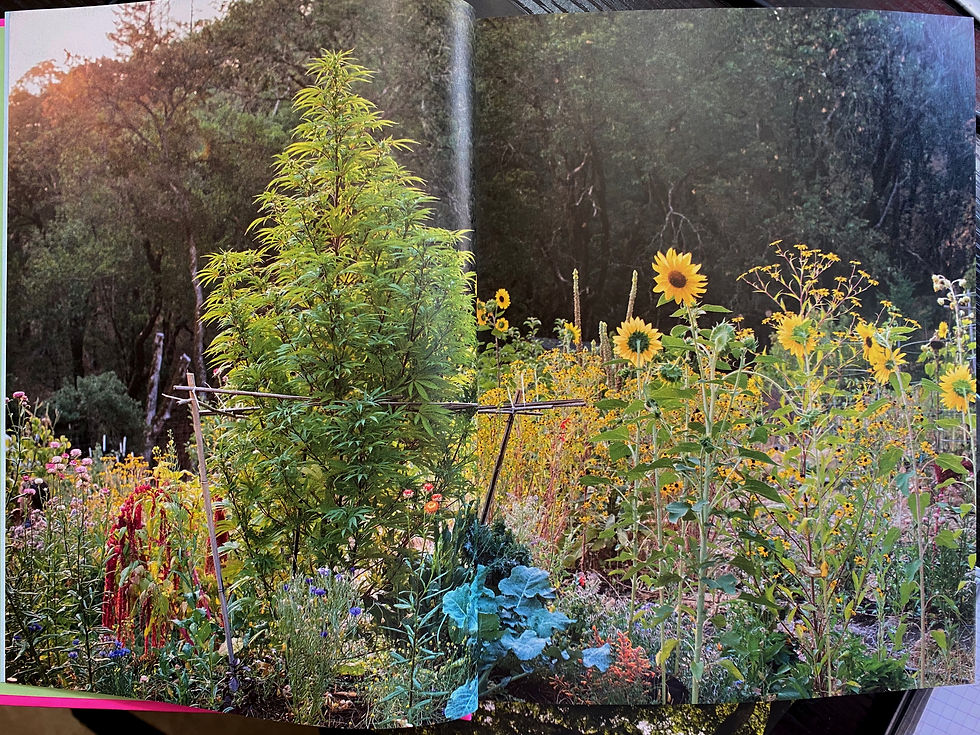
Rachel in the Weeds Johanna in the Weeds Catching light, Weed Beauty
Johanna Silver is a gardener, writer and editor, formerly the garden editor at Sunset magazine and regular contributor to Martha Stewart Living, Better Homes & Gardens, and the San Francisco Chronicle. She is the author of The Bold Dry Garden, on the garden and legacy of famed California famed plantswoman Ruth Bancroft and her famed cacti and succulent garden.
This week Johanna joins us to talk about her newest book: Growing Weed in the Garden, a No-Fuss, Seed-to-Stash Guide to Outdoor Cannabis Cultivation out now from Abrams Press.
Cannabis has been legal for medicinal purposes in California since the late 1990s, and in late 2016, California voters approved the Adult Use of Marijuana Act, thereby legalizing the recreational use of cannabis. The use, sale, and possession of cannabis over .03% THC remains illegal under federal law, however. That said, according to a recent report on NPR: "Thirty-three US states currently allow for some form of sale and consumption of marijuana. And of those, more than 20 states have designated the cannabis industry as essential during the coronavirus outbreak.
Cannabis sativa is a plant equally loved and reviled, common and commonly misunderstood. As the rest of our warm season crops – tomatoes, peppers, eggplant and the like come online in the garden – this week we’re joined by Johanna to help us demystify this other warm season crop and very specific weed.
"They can be so beautiful, with amazing fragrances, and they are among the oldest plants cultivated by humans."
Johanna Silver, Growing Weed in the Garden
From the beginning of its prohibition in the 1920s to becoming fully illegal in the 1970s controlled substances act, to its recent legalization in varying degrees in 33 states, Cannabis can be very confusing. In our conversation Johanna helps to shine a light in a long storied plant.
You can find Johanna at JohannaSilver.com and on Instagram @jojosilver
For a full list of the legal status of Cannabis state by state, check out more information here:

Join us again next week when author and maker Melanie Falick joins us to discuss her new book, "Making a Life, Working by Hand and Discovering the Life You are Meant to Live" out now from Artisan. the empowerment behind the hand made in our lives – in making our lives. Hard to say when this truth has ever been more apparent to so many of us. And of course, to make a garden is to grow a better life by the sweat and creativity of our own hands.
There are soooooo many ways people engage in and grow from the cultivation of their places.
RELATED EPISODES INCLUDE:
- THE KITCHEN GARDEN REVIVAL, NICOLE BURKE of GARDENARY
Johanna Silver Dried Herb Harvest Preserved Iconic Leaves Seedling Weed Beautiful Flowers He's Hired On a Rose Photo Shoot There's Hope Johanna & Ruth Bancroft Post Partum Watering Home School Enjoying the Fescue Lawn Alaska Peonies
Thinking out Loud this week...
Really – I have had people say to me forever – well at last since before California’s landmark legalization in 2016, "you should do an episode on pot!" And I was nothing less than dismissive. "No way – way too fringe for me."
And here I am in doing it. Why? Because if there’s one thing I know, it’s that in the garden as in life (to quote Annie Red Bird) those uncomfortable territories in our own minds or lives that are masked by prejudice are calling out to us asking us to wonder why? Why do I have such a bias against this one, ancient and medicinal plant? And who benefits OR is harmed by my harboring an un-interrogated blanket rejection of any one plant – especially one as ancient potentially healing, ritually rich, and useful as this one? Because Cannabis itself has done nothing wrong – and there are PLENTY of other psychoactive plants that we blithely cultivate in our gardens without much fanfare let alone confusing legislation – poppies, salvias, skullcaps, cacti, agave, and more.
But this plant is shrouded in angst and misinformation and so when Johanna Silver started documenting on Instagram her journey in researching and trialing Cannabis, I paid attention to my own reaction – and my own misunderstanding and lack of solid information. And I was in. Because if one of the things we’re trying to address as gardeners in this world is the plant blindness of the whole, then un-founded plant blindfolds over our eyes has no place.
In this time of Covid-19 – of social distancing and varying levels of isolation – you all have been my constant companions. In my mind, in my ears, in my in-box, on social media. Want to know something? There are more than 32,000 of you who tune into the Cultivating Place podcast every month – which blows my mind. From Seattle to Austin, Los Molinos, Ca to London England and Orange, New South Wales, Australia – we grow together and we grow better – deeper, wider, louder and wiser, gentler.
We are the gardeners – regenerative, intersectional, powerful agents of positive change.
Thank you for listening, thank you for donating to support the program, thank you for sharing the episodes out to your own family and friends – we are our own mycelial network of food, beauty, utility, medicine – cultural and environmental literacy starting from our own small seeds of this undeniable impulse to garden.
It may be me doing most of the talking people – but I hear you. Thank you….
WAYS TO SUPPORT CULTIVATING PLACE
SHARE the podcast with friends: If you enjoy these conversations about these things we love and which connect us, please share them forward with others. Thank you in advance!
RATE the podcast on iTunes: Or wherever you get your podcast feed: Please submit a ranking and a review of the program on Itunes! To do so follow this link: iTunes Review and Rate (once there, click View In Itunes and go to Ratings and Reviews)
DONATE: Cultivating Place is a listener-supported co-production of North State Public Radio. To make your tax-deductible listener contribution – please click the donate button below. Thank you in advance for your help making these valuable conversations grow.

Or, make checks payable to: North State Public Radio - Cultivating Place
with Cultivating Place in the memo line, too
mail to: California State University, Chico
400 W. First Street
Chico, CA 95929-0999


Độ rõ ràng của dữ liệu hiển thị thường ảnh hưởng trực tiếp đến tốc độ thao tác khi tham gia các nội dung có chu kỳ nhanh như xổ số hoặc keno. Trong cách vận hành, hệ thống tại Xoilac TV phân tách dữ liệu theo từng loại hình và cập nhật kết quả theo thời gian thực, giúp dễ theo dõi từng kỳ quay. Việc chuyển đổi giữa xổ số và các nội dung khác không làm mất trạng thái đang sử dụng. Khi mình thao tác liên tục giữa nhiều khu vực, toàn bộ trải nghiệm vẫn giữ được sự ổn định và không bị gián đoạn
Mình khá thích những bài giới thiệu nền tảng giải trí được trình bày theo kiểu nhẹ nhàng, không quá nhiều thông tin dồn dập. Khi nhắc đến WW88, nội dung được lồng ghép ở phần thân bài nên tổng thể khá cân đối, đọc không bị ngắt mạch. Bài viết tập trung vào trải nghiệm cơ bản như thao tác đơn giản, giao diện thân thiện, cùng các trò quen thuộc như slot, game bài, bắn cá, giúp người đọc dễ hình dung ngay từ lần đầu tiếp cận, chưa đánh giá chi tiết. Cảm giác chung là trình bày khá mạch lạc.
Lúc đầu mình chỉ định vào lướt qua thôi, không nghĩ sẽ tìm hiểu nhiều. Nhưng khi thử thao tác giữa slot và esport thì thấy tốc độ xử lý khá mượt, không có cảm giác bị gián đoạn. Các danh mục được sắp xếp rõ nên nhìn tổng thể khá gọn. Khi mình mở 8XBET xem thêm thì thấy còn có slot, thể thao và mini game tích hợp chung khá thuận tiện. Theo mình, nếu duy trì được sự liền mạch này thì sân chơi sẽ tạo được sự ổn định khi sử dụng lâu.
Khi đọc các bài giới thiệu nền tảng giải trí, tôi thường thích những bài viết ngắn gọn để có thể xem nhanh trên điện thoại. Bài viết này có bố cục khá dễ theo dõi khi phần nhắc đến cm88 được đặt ở giữa nội dung. Điều đó giúp mạch bài trở nên tự nhiên hơn và không tạo cảm giác quảng cáo quá sớm. Nội dung tập trung vào trải nghiệm chung của người dùng với giao diện dễ sử dụng và nhiều danh mục quen thuộc như slot, game bài hay mini game. Nhìn chung cách diễn đạt khá nhẹ nhàng và dễ hiểu.
Mình khá thích những bài giới thiệu nền tảng giải trí được trình bày theo kiểu nhẹ nhàng, không quá nhiều thông tin dồn dập. Khi nhắc đến link vào sc88, nội dung được lồng ghép ở phần thân bài nên tổng thể khá cân đối, đọc không bị ngắt mạch. Bài viết tập trung vào trải nghiệm cơ bản như thao tác đơn giản, giao diện thân thiện, cùng các trò quen thuộc như slot, game bài, bắn cá, giúp người đọc dễ hình dung ngay từ lần đầu tiếp cận, chưa đánh giá chi tiết. Cảm giác chung là trình bày khá mạch lạc.